
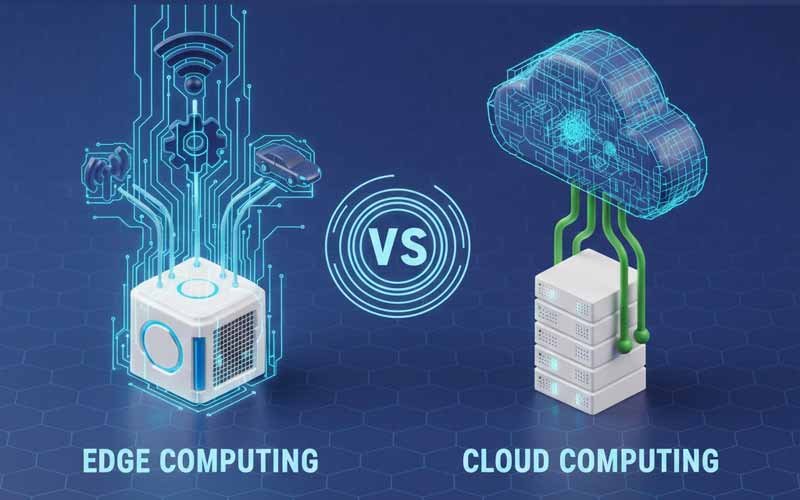
These days, the Internet of Things (IoT) is everywhere. From smart homes and wearables to self-driving cars and automated factories, we’re generating massive amounts of data every single day. The big question is: how do we handle all this data efficiently? That’s where edge computing and cloud computing come in. Understanding the difference between the two can really help you choose the right setup for your smart tech projects.
What is Edge Computing?
Edge computing basically means processing data close to where it’s created — right on the device itself or on a nearby gateway — instead of sending everything to a cloud server far away. Think of a self-driving car or a smart factory machine: these devices need to make split-second decisions. Edge computing makes that possible.
Processing data locally also reduces internet traffic. Only the important stuff gets sent to the cloud, which saves bandwidth and lowers costs. Plus, even if your internet connection drops, the device can keep running. Another bonus? Sensitive data stays closer to home, making it more secure.
But it’s not perfect. Some challenges inclu de:
- Setting up edge devices can be pricey because each one needs computing power.
- They usually have less storage and processing ability than cloud servers.
- Managing a lot of edge devices at once can get complicated and might need skilled staff.
What is Cloud Computing?
Cloud computing works a bit differently. Here, IoT devices send data to remote servers over the internet. These servers are powerful — they can store huge amounts of data and run complex tasks like AI or machine learning.
The cloud is great if you want to scale quickly. Need more storage or computing power? Just add it — no buying expensive hardware. Teams can access the cloud from anywhere, which is perfect for remote management. Developers love it because they can run big tasks without worrying about local limitations.
Challenges with cloud computing:
- You need a reliable internet connection.
- Sending all data to faraway servers can cause delays — bad news for real-time tasks.
- Data privacy can be tricky since information travels over the internet.
Why a Hybrid Approach Often Works Best
Most modern IoT systems don’t stick strictly to edge or cloud computing. They mix both. Fast, real-time tasks — like monitoring a machine or sending alerts — happen at the edge. Heavy tasks — like AI training, deep analytics, or long-term storage — happen in the cloud.
This “hybrid” setup gives you the best of both worlds. Edge devices stay fast and efficient, while the cloud handles the heavy lifting. Experts sometimes call this the “edge-cloud continuum” — where data flows smoothly between edge and cloud depending on what’s needed.
Choosing the Right Approach
- Edge computing: Best for quick decisions, real-time monitoring, and high privacy. Examples: self-driving cars, health devices, smart factories.
- Cloud computing: Best for storing huge amounts of data, running deep analytics, and training AI.
- Hybrid: Most projects benefit from a mix — edge handles speed, cloud handles scale. This setup keeps your system fast, efficient, and ready to grow.
IoT’s future relies on both edge and cloud computing. Edge makes data handling fast, reliable, and secure. Cloud provides massive storage, complex processing, and advanced analytics. Combine them, and you get smart IoT systems that respond quickly, handle tons of data, and grow without limits.
FAQs: Edge vs Cloud Computing for IoT Devices
Q1: What is the main difference between edge and cloud computing?
A: Edge computing processes data near the device for speed and security. Cloud computing stores and processes data remotely for scale and advanced analytics.
Q2: Which is better for IoT devices: edge or cloud computing?
A: It depends. Real-time tasks need edge computing. Large data processing and AI benefit from cloud computing. Most systems use a hybrid approach.
Q3: Can edge computing work without the internet?
A: Yes. Edge devices can operate locally even if the internet is down, ensuring uninterrupted performance.
Q4: Is cloud computing secure for IoT devices?
A: Cloud providers offer strong security, but sensitive data travels over the internet. Combining cloud with edge can improve privacy.
Q5: What is a hybrid edge-cloud IoT system?
A: A hybrid system uses edge devices for quick decisions and cloud servers for storage, analytics, and AI — offering speed, scale, and reliability.
Q6: Why do smart homes and self-driving cars need edge computing?
A: These devices require split-second decision-making, which is only possible with local data processing on the edge.
Q7: How does edge computing improve response time in smart IoT devices?
A: Edge computing processes data locally, near the device, which drastically reduces delays. This fast response is crucial for applications like self-driving cars, medical devices, and industrial machines where milliseconds matter.
Q8: Can small businesses benefit from hybrid edge-cloud IoT systems?
A: Yes. Even small businesses can use hybrid systems to save costs and improve efficiency. Edge devices handle quick local tasks, while the cloud manages data storage and analytics, allowing growth without heavy upfront investment.




Add comment