
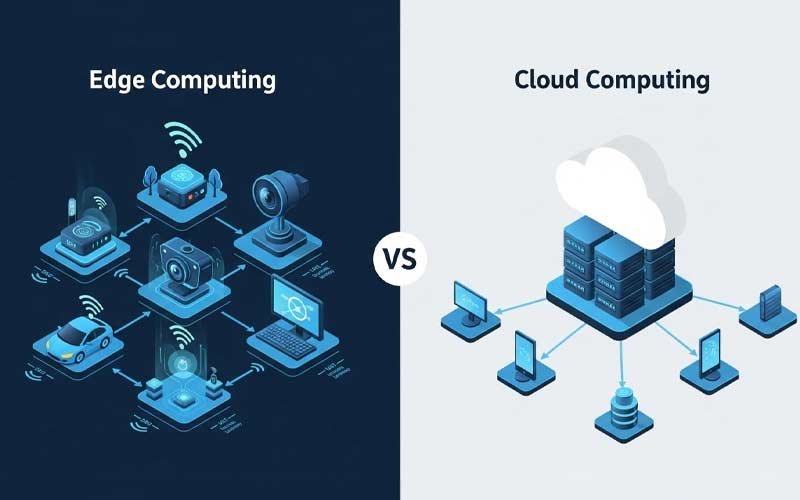
In today’s technology world, two terms are often discussed by businesses and tech enthusiasts: edge computing and cloud computing. Both are important technologies for managing data, running applications, and improving performance. But they are not the same. Understanding edge computing vs cloud computing helps organizations make better technology decisions.
What is Cloud Computing?
Cloud computing is a way to use computing resources over the internet. Instead of storing data on your computer or server, it is stored in remote servers called data centers. This allows you to access files, applications, and software from anywhere, anytime.
Cloud computing provides high storage capacity and strong processing power. It is also cost-effective because businesses only pay for what they use. Popular cloud services include Amazon Web Services (AWS), Microsoft Azure, and Google Cloud Platform (GCP).
Cloud computing is very useful for large businesses, startups, and even personal projects. It supports hosting websites, mobile apps, online collaboration, and big data analysis.
What is Edge Computing?
Edge computing is a newer technology that processes data closer to where it is generated. Instead of sending all data to a central cloud server, it is processed locally on devices or nearby servers.
The “edge” refers to the location near the data source. This could be sensors, smartphones, cameras, or IoT devices. Edge computing is fast because it reduces the time data has to travel.
It is especially useful for applications that need instant results. Examples include self-driving cars, smart traffic lights, industrial machines, and wearable health devices. By processing data locally, edge computing reduces delays and saves network bandwidth.
Edge Computing vs Cloud Computing: Main Differences
Understanding the key differences helps us know when to use each technology.
In cloud computing, data is stored and processed in large centralized data centers. In edge computing, data is processed near the device or source. Cloud computing can handle massive data and complex applications, but it can be slower for real-time tasks. Edge computing is faster and better for instant decisions.
Latency is another important factor. Cloud computing may have higher latency because data travels long distances. Edge computing has very low latency since processing happens locally.
Security is different too. Cloud providers offer strong security, but data is transmitted over the internet. Edge computing can keep sensitive data local, which reduces some privacy risks.
Cost also varies. Cloud computing may become expensive with heavy usage, while edge computing can reduce costs by processing data nearby.
Why Edge Computing is Important
With the growth of IoT devices and smart technologies, edge computing is becoming more popular. Devices like cameras, smart cars, and wearable devices produce huge amounts of data every second. Sending all this data to the cloud would be slow and expensive. Edge computing solves this problem by processing data locally.
For example, a smart traffic light can detect accidents in real-time and change signals immediately. Industrial machines in factories can monitor performance and detect problems instantly. Hospitals can track patient health and alert staff quickly.
Edge computing also reduces network congestion. Only essential data is sent to the cloud, which saves bandwidth and improves efficiency.
Why Cloud Computing is Still Crucial
Even though edge computing is fast, cloud computing remains essential. Cloud computing provides large storage, high processing power, and global access. Businesses rely on cloud servers for hosting websites, running complex applications, and performing analytics.
Cloud computing also makes collaboration easier. Teams in different locations can work on the same files in real-time. It is reliable and reduces the need for physical servers and IT infrastructure.
Cloud computing is perfect for storing huge amounts of data, performing complex calculations, and running applications that do not require instant processing.
When to Use Cloud Computing
Cloud computing is ideal for:
Real-time access is not critical. Applications that need high computing power, like big data analysis and machine learning, work best in the cloud. Hosting websites, mobile apps, and online services is easier with cloud computing. Businesses also use the cloud for backups, disaster recovery, and collaboration.
If you have a project that requires global access or centralized storage, cloud computing is the right choice.
When to Use Edge Computing
Edge computing is best for applications that need fast processing. Autonomous vehicles cannot wait for data to travel to the cloud. Smart factories need instant alerts for machine problems. Smart healthcare devices must detect emergencies in real-time.
Edge computing is also useful in areas with weak internet connectivity. By processing data locally, devices can work without relying on the cloud. Any situation that demands low latency and quick response benefits from edge computing.
Combining Edge and Cloud Computing
Many organizations use a hybrid approach, combining edge computing and cloud computing. Edge devices handle real-time processing, while cloud servers handle storage, backups, and heavy analysis.
For example, in a smart city, edge devices can detect accidents and control traffic signals instantly. Cloud servers can collect traffic data over time to plan better road systems. This combination provides speed, efficiency, and scalability.
Hybrid systems also reduce costs and improve reliability. Businesses get the benefits of both technologies without depending solely on one.
Challenges of Edge Computing
Edge computing is not perfect. Devices at the edge have limited processing power compared to cloud servers. Security can be a problem if local devices are not properly protected. Managing many edge devices can be complex. Integration with cloud systems also requires careful planning.
Despite these challenges, edge computing is growing because it solves problems that cloud computing alone cannot, especially for real-time applications.
Challenges of Cloud Computing
Cloud computing also has limitations. High latency makes it unsuitable for instant decision-making. It depends heavily on internet connectivity. Heavy usage can increase costs, especially for large-scale applications. Data privacy is another concern because sensitive data is stored on external servers.
Businesses need strong security measures and reliable internet to make cloud computing work effectively.
Future Trends in Edge Computing and Cloud Computing
The future of edge computing vs cloud computing looks very promising. With more smart devices, IoT gadgets, and AI applications, the demand for fast and efficient data processing is increasing. Edge computing will continue to grow in industries like healthcare, transportation, and manufacturing, where real-time decisions are critical. At the same time, cloud computing will evolve to offer more storage, stronger analytics, and improved security for businesses of all sizes.
Impact on Businesses
Businesses today can no longer rely on just one technology. Understanding edge computing vs cloud computing helps companies choose the right system for their needs. For example, a retail business can use edge computing in stores for instant inventory updates, while using cloud computing for sales analytics and long-term data storage. This combination helps businesses save costs, improve efficiency, and provide better customer experiences.
Preparing for the Digital Future
Organizations that want to stay competitive must embrace both technologies. By combining edge computing and cloud computing, they can process critical data quickly while keeping large-scale operations secure and manageable. Companies that prepare for this digital future will benefit from faster decision-making, reduced network congestion, and smarter use of resources. This makes understanding edge computing vs cloud computing essential for every modern business.
Benefits of Hybrid Systems
Using a hybrid system that combines edge computing vs cloud computing brings the best of both worlds. Businesses can process urgent data quickly at the edge while storing large amounts of information in the cloud for long-term use. This approach reduces costs, improves reliability, and ensures faster response times for critical applications. Hybrid systems also help companies scale operations easily without compromising speed or security.
Role in Emerging Technologies
Edge computing and cloud computing play a vital role in emerging technologies like artificial intelligence, machine learning, and smart cities. For instance, AI-powered devices can process data locally using edge computing, while cloud servers handle training, storage, and complex calculations. Understanding edge computing vs cloud computing allows organizations to implement these technologies efficiently and stay ahead in innovation.
Frequently Asked Questions
- What is the difference between edge computing and cloud computing?
Edge computing processes data near the device or source, which makes it fast and suitable for real-time tasks. Cloud computing stores and processes data in centralized servers, which is ideal for large-scale storage and heavy computing.
- Which one is faster, edge computing or cloud computing?
Edge computing is faster because it processes data locally, reducing the time it takes for information to travel to the cloud. Cloud computing can be slower for real-time applications.
- Can edge computing and cloud computing work together?
Yes, many organizations use a hybrid approach. Edge devices handle real-time processing, while cloud servers store data, perform analysis, and manage backups. This combination provides speed, efficiency, and scalability.
- Why is cloud computing still important?
Cloud computing provides large storage, high processing power, and global access. It is reliable for hosting websites, running applications, performing analytics, and collaborating across multiple locations.
- What are the challenges of edge computing?
Edge computing devices have limited processing power compared to cloud servers. Security can be an issue if local devices are not protected, and managing many devices can be complex.
- What are the challenges of cloud computing?
Cloud computing depends on internet connectivity. High latency can affect real-time tasks, and heavy usage may increase costs. Data privacy is also a concern since sensitive information is stored on external servers.
- Which one should I choose for my business, edge or cloud computing?
It depends on your needs. If you need real-time processing, low latency, or local data handling, edge computing is better. For large-scale storage, complex computing, and global access, cloud computing is suitable. A hybrid approach often gives the best results.
Conclusion: Edge Computing vs Cloud Computing
Edge computing vs cloud computing is not about choosing one over the other. Both have unique benefits and can complement each other. Edge computing is fast, local, and ideal for real-time tasks. Cloud computing is scalable, centralized, and excellent for storing large data and running complex applications.
The best approach is often a hybrid system. Businesses can process time-sensitive data at the edge while using the cloud for storage, analysis, and long-term management. This combination ensures speed, efficiency, and flexibility.
In simple words, cloud computing is like a large warehouse that stores everything centrally. Edge computing is like a small, fast store near you that provides instant access. Using both together gives the best results in today’s fast-paced digital world.
Explore expert tech guides and insights today at EmbossitWorld.





Add comment