
Introduction
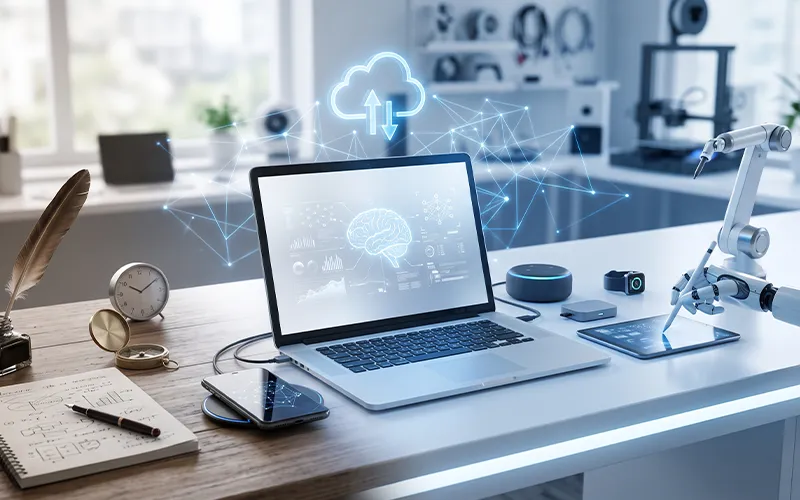
If you look around your home, workplace, or even the street outside, you will find countless examples of human innovation. Smartphones, computers, cars, online services, medical equipment, and household appliances have become such a normal part of life that we often use them without thinking about how they work.
But what lies beyond the devices we use in our everyday lives?
The simplest answer is that it is the practical use of knowledge, skills, tools, and methods to solve problems or accomplish useful tasks. It can be something very simple, such as a hand tool, or something highly advanced, such as artificial intelligence.
The idea is much older than computers and the internet. People have always searched for easier, safer, and more effective ways to complete difficult tasks. Over thousands of years, these efforts have produced inventions that changed how humans live, communicate, travel, learn, and work.
This guide explores how these innovations developed, where they are used, and why they have become such an important part of modern society.
It is the practical application of knowledge to create a useful solution. A tool, machine, system, process, or piece of software can all fall under this broad idea when they are created to perform a particular purpose.
Consider a few everyday examples. A calculator makes mathematical work quicker. A refrigerator helps preserve food. A bicycle provides a practical way to travel. A smartphone combines communication, photography, navigation, entertainment, and computing in one device.
None of these examples has to be extremely advanced to qualify. Their purpose is what matters.
A useful invention usually begins with a need. Someone wants to save time, reduce physical effort, improve accuracy, communicate over a distance, or solve a problem that existing methods cannot handle efficiently.
That is why the subject is not limited to electronic gadgets. It also reflects human creativity and the ability to find practical solutions to everyday problems.
The Origins of Human Innovation
The story of human innovation started long before electricity, computers, or digital networks.
Early people fashioned simple implements using materials such as stone, timber, and animal bones.These objects helped with hunting, cutting, building, and preparing food. Learning to control fire was another important development because it provided warmth, protection, and a reliable way to cook.
As communities developed, people discovered better ways to grow crops and manage animals. Farming equipment made agricultural work more productive, while improved construction methods allowed larger settlements to develop.
The wheel changed transportation and made it easier to move heavy materials. Writing allowed knowledge to be recorded and passed to future generations. Metalworking produced stronger tools, weapons, and equipment.
Later, the printing press made written information easier to reproduce and distribute. Steam engines and factory machinery then transformed manufacturing during the Industrial Revolution.
Electricity introduced another major period of change. It made practical lighting, telephones, radios, appliances, and eventually electronic computers possible.
The arrival of the internet connected people and information on a global scale. Smartphones and cloud services pushed this transformation even further.
Modern society depends on countless systems that most people rarely stop to notice.
Communication is one of the clearest examples. A message can now reach someone on another continent within seconds. Students can access educational resources from home, while employees can collaborate with colleagues without being in the same building.
Businesses have also changed significantly. A small company can create an online store, accept digital payments, advertise to customers in different countries, and manage its operations with software.
Healthcare has benefited from improved equipment and digital record systems. Transportation has become more connected through navigation tools and traffic-management systems. Farmers can use modern machinery and sensors to improve agricultural work.
Another reason this subject matters is that these systems influence more than convenience. They can affect productivity, education, employment, communication, business growth, and access to information.
At the same time, progress can create new challenges. Privacy concerns, cybersecurity threats, misinformation, and excessive screen use are examples of problems that require careful attention.
Main Areas of Modern Innovation
There is no single category that covers every modern invention. Different fields use different tools and systems to achieve different goals.
Businesses use these resources for accounting, communication, file management, customer service, data analysis, and internal operations.
Modern Communication Systems
Communication tools allow people to exchange information across short and long distances.
Mobile phones, email, messaging services, video conferencing, radio, television, and social platforms are common examples.
These systems have made remote communication easier for families, students, employees, and organizations.
Healthcare relies on a wide range of specialized equipment and digital systems.
Diagnostic machines, patient-monitoring devices, laboratory equipment, digital health records, and medical software can support healthcare professionals in different areas.
These developments can improve the way information is collected, stored, analyzed, and shared.
Modern Transportation Systems
Modern transportation combines mechanical engineering, electronics, software, and communication systems.
Cars, trains, aircraft, ships, electric vehicles, navigation systems, and traffic-control equipment all contribute to today’s transportation network.
Navigation applications are a simple example of how digital tools have changed travel. Drivers can receive directions, traffic updates, and estimated arrival times while on the road.
Digital Tools for Modern Learning
Schools, universities, teachers, and independent learners increasingly use digital resources.
Online classrooms, learning platforms, digital textbooks, educational applications, interactive lessons, and video courses provide additional ways to study.
These resources can be especially useful for people who need flexible access to learning materials.
Digital Solutions for Modern Businesses
Organizations use digital solutions to manage daily operations and serve customers.
E-commerce platforms, accounting software, payment systems, customer-management tools, project-management applications, and analytics platforms are widely used.
Choosing the right tools can help companies reduce manual work, organize information, and improve customer experiences.
A person may use a smartphone to set an alarm, check the weather, send messages, follow directions, order food, transfer money, or watch a video.
At work, computers and software may be used for documents, meetings, scheduling, file sharing, customer support, sales, and data analysis.
At home, people may use digital payment services, online shopping platforms, smart appliances, security systems, and streaming services.
Scientists use specialized equipment to collect measurements and analyze information. Manufacturers depend on machinery and automated systems to produce goods. Farmers can use sensors, machinery, and data to improve agricultural decisions.
Government organizations also rely on digital systems for records, public services, communication, and administration.
The list keeps growing because new needs often lead to new solutions.
Understanding Technical Consulting Services
Not every business has enough internal expertise to make complicated technical decisions.
The work can include research, planning, system evaluation, implementation, training, and long-term improvement.
The goal is not simply to purchase the newest tool. It is to identify a practical solution that matches the organization’s requirements, budget, and future plans.
Evaluating Modern Systems
Before replacing an existing system, an organization may want to understand whether the current setup is still suitable.
A system assessment is a structured review of a tool, system, process, or platform.
The evaluation may consider:
- Performance
- Cost
- Security
- Reliability
- Ease of use
- Compatibility
- Scalability
- Future requirements
For example, a company might review its accounting software before deciding whether a replacement would actually provide enough value.
A careful assessment can reveal weaknesses that may not be obvious during normal daily use.
Knowing how to operate a smartphone does not necessarily mean someone has strong digital skills.
Digital literacy refers to the ability to understand and use modern digital tools effectively, safely, and responsibly.
A digitally capable person should be comfortable with common online tasks, basic security practices, information evaluation, digital communication, and learning unfamiliar applications.
This skill has become increasingly valuable in education and employment.
People do not need to become programmers to develop good digital literacy. Understanding how to protect accounts, recognize suspicious activity, evaluate online information, and use common software can already make a significant difference.
Enablement means providing people with the tools, training, systems, and support they need to work more effectively.
Imagine a company introduces a new project-management platform. Simply installing the software does not guarantee better productivity.
Employees may need training, clear instructions, technical support, and time to become comfortable with the new system.
When these elements work together, digital tools can remove obstacles and make everyday work easier.
Modern devices can make life easier, but constant access can also encourage unhealthy habits.
Social media, online games, streaming services, and mobile applications are designed to keep users engaged. Spending too much time with them can interfere with sleep, work, education, relationships, and other responsibilities.
Healthy boundaries can make a difference.
People can turn off unnecessary notifications, take regular breaks, avoid screens during important activities, and create periods of the day for offline activities.
The goal is not to remove digital tools from everyday life. Instead, they should remain useful resources rather than becoming a constant source of distraction.
Managing Outdated Digital Systems
Businesses sometimes continue using outdated systems because replacing them seems expensive or inconvenient.
This creates technical debt.
The idea is similar to financial debt. A quick technical fix may solve an immediate problem, but postponing a better solution can create larger costs later.
For example, an old software system may continue working for years. Eventually, it may become difficult to maintain, harder to secure, or incompatible with newer applications.
Regular system reviews and planned upgrades can reduce this burden.
Businesses can face financial losses from certain digital and technical incidents.
Insurance coverage in this area is generally designed to address specific risks related to digital systems, technical services, cyber incidents, data problems, or business interruptions.
The exact coverage depends on the provider and policy. Different plans may have different limits, exclusions, and conditions.
Insurance should not replace basic security practices. Businesses still need reliable backups, employee training, access controls, software updates, and responsible data management.
Understanding the Digital Tools Behind an Application
A stack is a combination of technical tools used to build and operate a website, application, or digital service.
For example, a web application may use separate technologies for its user interface, server-side operations, database, hosting, and other functions.
Developers choose these components according to project requirements.
Performance, security, scalability, cost, compatibility, and available skills can all influence the final selection.
Understanding a stack can help business owners and non-technical teams see what powers a digital product behind the scenes.
Connecting Digital Systems
Businesses often depend on several applications at the same time.
A company might use separate systems for sales, accounting, inventory, customer service, payments, and communication.
Managing Digital Threats and Uncertainty
Every technical system comes with potential risks.
These can include system failures, cyberattacks, data loss, privacy problems, outdated software, human mistakes, and dependence on unreliable services.
Organizations can reduce exposure through software updates, access controls, backups, monitoring, employee training, and disaster-recovery planning.
Individuals can also take simple precautions. Unique passwords, multi-factor authentication, regular updates, and careful handling of personal information can reduce many common security problems.
Legal Rules for the Digital Age
Digital innovation has created many legal questions that did not exist in the same form in earlier decades.
The legal environment can be challenging because new digital services often develop faster than regulations.
What the Future May Bring
The next generation of digital and physical innovations is likely to influence almost every major industry.
Artificial intelligence is becoming more capable of analyzing information, recognizing patterns, generating content, and assisting with routine tasks.
Robotics is advancing in manufacturing, logistics, research, healthcare, and specialized environments.
Connected devices are also becoming increasingly common. Smart appliances, wearable devices, vehicles, and industrial sensors can communicate with networks and exchange information.
Cloud computing continues to provide organizations with flexible access to computing resources without requiring every business to maintain large physical infrastructures.
However, future progress should not be judged only by how advanced a system appears.
Privacy, cybersecurity, employment, environmental impact, fairness, accessibility, and human oversight will remain important.
The most valuable innovations will likely be those that solve real problems and provide meaningful benefits.
Frequently Asked Questions
- What Does It Mean in Simple Words?
It means applying knowledge, tools, and practical methods to solve problems or complete tasks more effectively.
- Are These Tools Limited to Computers?
No. It includes simple tools, machines, transportation systems, medical equipment, software, communication systems, and many other human-made solutions.
- How does it affect everyday life?
It influences communication, education, transportation, shopping, banking, entertainment, employment, and many routine activities.
- Why do businesses use digital tools?
Companies use them to organize information, communicate with customers, automate repetitive tasks, manage operations, and make better decisions.
- What are the major categories?
Common categories include information systems, communication tools, medical equipment, transportation solutions, educational platforms, and business applications.
- What are the main benefits?
Major advantages include faster communication, easier access to information, improved productivity, greater convenience, better accessibility, and new opportunities.
- Can modern tools create problems?
Yes. Privacy issues, cybersecurity threats, misinformation, excessive screen use, digital dependence, and changing employment patterns are some common concerns.
- What can we expect in the future?
Artificial intelligence, robotics, automation, connected devices, and advanced digital services are likely to become more common across different industries.
Final Thoughts
Human progress has moved from simple tools to advanced digital systems that are now part of everyday life. The main purpose has remained the same: finding practical ways to make tasks easier, solve challenges, and improve how people live and work.
Today, these innovations play an important role in communication, education, healthcare, transportation, business, and access to information. They can save time, improve efficiency, and create new opportunities for individuals and organizations.
Modern digital solutions also bring certain responsibilities. Privacy, cybersecurity, misinformation, accessibility, and excessive screen use are important concerns that should not be overlooked.
Understanding these developments does not require advanced technical knowledge. You do not need to be an engineer or programmer to recognize how digital tools affect everyday activities.
A basic understanding can help people make informed choices, identify possible risks, adapt to new developments, and use useful solutions with greater confidence.
In the end, the value of an invention is not measured by how complicated it appears. Its importance comes from how effectively it addresses real problems and makes everyday life better.





Add comment